
The Reading Room.

The case for mineral oil,
the quiet workhorse.
Begin with what oil does not do: it does not dissolve earwax. What a good oil does is soften and lubricate it — restoring enough pliability that the ear canal’s own outward migration, the maintenance system you were born with, can resume its work. That is the entire trick, and it is a good one.
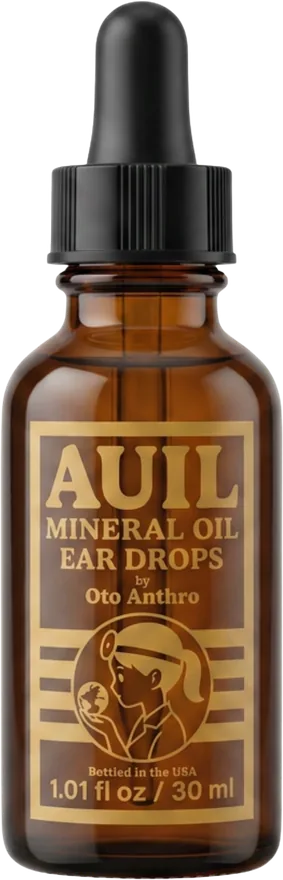
Mineral oil is the Department’s everyday answer because it is chemically inert. It does not oxidize, does not go rancid on the shelf, and carries minimal allergenic risk — which is why it has sat in physicians’ cabinets for a century. Auil Original is pharmaceutical-grade mineral oil, 70 USP: one ingredient, printed plainly on the label, with nothing else in the bottle.
Where it earns its keep is the skin of the canal itself. The ear canal is lined with skin — with the same vulnerabilities as your hands or face — and mineral oil excels at moisturizing it. Chronic dryness, eczema-prone ears, hearing-aid wearers, dry climates and long winters: these are mineral-oil occasions.
The routine is three steps: tilt the head so the ear faces up, apply the drops, wait, and wipe the excess on rising. Consistency beats quantity — a few applications a week does more than a heroic once-a-month flood. Leave the drops on the shelf if there is ear pain, drainage, a perforated eardrum, ear tubes or recent surgery; those ears belong in an examination room, not under a pipette.
Olive oil, the sweet-oil
tradition, documented.
Of every oil ever dripped into a human ear, olive oil has the longest history and the most direct study behind it. Physicians once called it sweet oil, and grandmothers kept a warmed spoonful of it on hand for exactly the purpose this bottle serves: softening hardened earwax so the canal can clear itself.
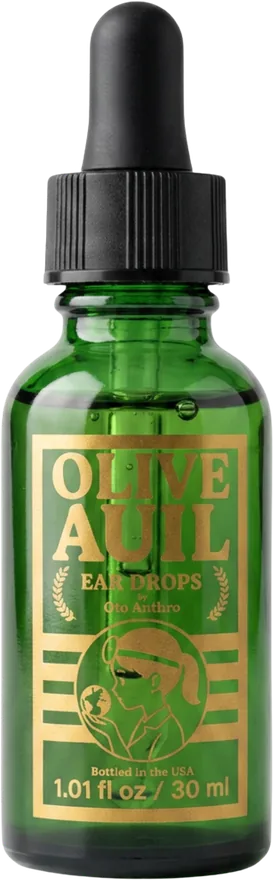
Olive Auil is organic extra-virgin olive oil, cold pressed — plant-derived, with a heavier, more cushioned feel in the canal that many patients prefer. It is the pick for stubborn, hardened wax buildup, and for anyone who simply wants a botanical ingredient over a refined one. Being a plant oil it can oxidize over a long enough shelf life, which is why the Department bottles it in green glass and sells it in honest 30 ml portions rather than drums.
It is the outdoors one for a reason: dust, debris and fresh-water conditions are its printed occasions. Camping, lakes and rivers, honest dirt — the ears that come home from those weekends are the ears this bottle was poured for.
The counsel is the same as for every preparation in Dept. A: oil softens, it does not excavate. Skip the cotton swabs, which push wax deeper and compact it; skip the ear candles entirely; and see a professional for pain, drainage, hearing loss, or wax that will not shift after a week or two of patient effort.
Coconut oil for ears,
with one distinction.
Can you put coconut oil in your ears? You can — and for the right ears it is a fine idea — but the jar in your pantry is the wrong tool. Virgin coconut oil solidifies below 76°F, which makes for a poor pipette experience and a worse one in the canal. The distinction that matters is fractionated coconut oil: liquid at room temperature, clear, odorless, and resistant to oxidation.
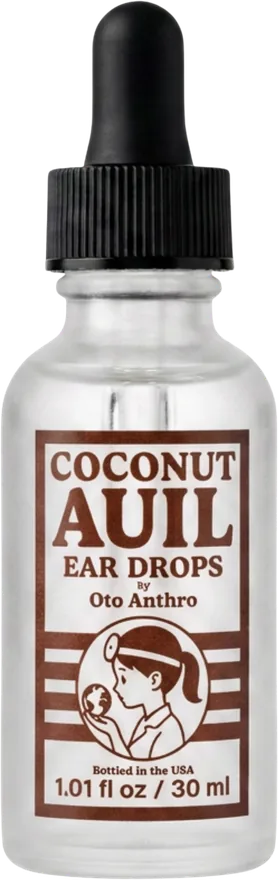
Coconut Auil is organic fractionated coconut oil (caprylic/capric triglyceride), fractionated specifically so it behaves like an ear drop instead of a baking ingredient. Its trade is moisture: it soothes dry, itchy, sensitive canal skin and helps moisturize an outer canal irritated by the modern ear’s two occupational hazards — earbuds worn dawn to dusk, and hearing aids worn all day.
It is the beach one on the label because its printed occasions read like a summer itinerary: sweat, saltwater, wind, cold and dry conditions. Hearing-aid wearers do best applying drops at night, after the device comes out, so the oil has quiet hours to work.
It suits dryness, itch and irritation more than dense wax blockage — for the truly stubborn plug, reach for the olive bottle. And the standing rules hold: no drops with ear pain, drainage, a perforated eardrum, tubes, or recent surgery. Pain, drainage or fever means get examined, not get creative.
On chins, tape, and the
problem with sealed lips.
The instinct behind mouth taping rests on sound reasoning: nasal breathing at night is generally the better arrangement. The method does not. Sealing the lips shut removes your backup airway the moment a nose stuffs up mid-sleep, can mask symptoms that deserve a doctor’s attention, and asks delicate lip skin to tolerate adhesive it never volunteered for.
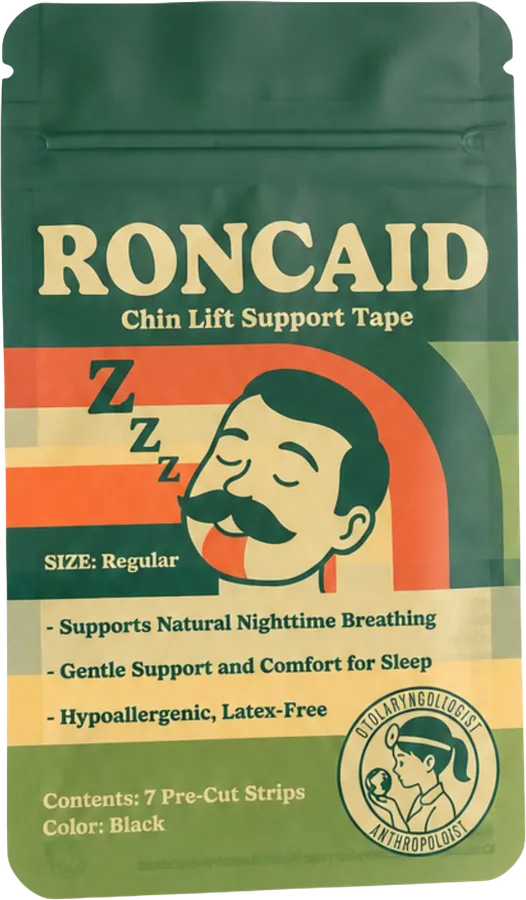
Roncaid takes a different route to the same intention. A pre-cut strip of flexible, hypoallergenic, latex-free kinesiology tape runs from where the chin meets the neck up to the front of the chin, gently supporting the muscles under the jaw through the night. The mouth stays fully openable — for a cough, a sneeze, a word to the dog, or simply because you want it open. Support, never a seal.
It is made for the light mouth-breather: the person who wakes with a dry mouth, or whose household reports gentle nighttime commentary. One pack carries seven pre-cut strips — one honest week — and the monthly subscription delivers four packs at a quarter off.
And the printed rule that outranks every sentence above: this is a comfort good, not a medical device. Anyone with diagnosed or suspected sleep apnea, chronic nasal blockage, or an airway condition should be talking to a physician, not a roll of tape.
The Reading Room.
The case for mineral oil, the quiet workhorse.
Olive oil, the sweet-oil tradition, documented.
Coconut oil for ears, with one distinction.