
Earbuds, Earmuffs, and Hats: Winter Ear Hygiene for a Covered Ear
Summer is swimmer's ear season. Winter has its own version, and it comes from the opposite direction: not water getting in, but the ear being covered up for hours at a time, every day, for months.
The covered ear is a different environment
Earmuffs, over-ear headphones, a hat pulled down, and in-ear buds under all of it — a typical winter commute occludes the canal more thoroughly than any other season. Two things happen in an occluded canal. It gets warm and humid, because the ear is body temperature and the cover traps what evaporates. And the normal outward migration of wax, which depends on the canal being open and jaw movement doing its work, slows down.
Meanwhile the rest of the skin on your body is dealing with dry winter air. So you get a canal that's dry and flaky in the morning, then warm, damp, and sealed for the eight hours you're wearing buds. Both states irritate, and they alternate.
Why cold season dries out the ear canal
Cold air holds very little moisture, and the air indoors is drier still: heating winter air drops its relative humidity even further, which is why forced-air heat is the bigger culprit than the weather outside. The lining of the ear canal is thin, especially the inner part that sits directly on bone, and its only real protection is the film of wax and oil made near the entrance. When dry air pulls that film away faster than the canal can replace it, the skin flakes, itches, and can crack.
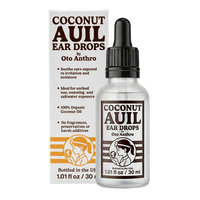
The itch is the real hazard. A fingernail, a key, or a swab scratches skin that is already fragile, and a cracked canal is how a winter case of outer-ear infection gets started. The answer is to put back what the air is taking: a few drops of oil at night, two or three times a week, through the cold months. Coconut Auil is the lightest of the three and the one I reach for when the problem is dryness. Auil Original, pure mineral oil, is the simplest and most inert. Olive Auil is the heaviest, and the better choice if wax has also been building up under your earbuds.
Earbuds are the main offender
In-ear buds are the biggest factor because they sit inside the canal rather than over it. They block migration completely, they push wax inward with every insertion, and the silicone tips collect skin oil and debris that goes back in the next morning. People who wear buds all day in winter are the group I see most for impacted wax in February.
Wipe the tips weekly with a damp cloth and let them dry. Take an hour off in the middle of the day. Don't insert them into a wet canal after a shower; let it air out first.
Earmuffs and hats are gentler, with one caveat
They sit outside the canal, so they don't block migration or push wax. Their effect is mostly warmth and humidity. The caveat is hygiene: a wool hat or fleece earmuffs worn daily for four months and never washed accumulates a lot of skin oil, and that goes right back against the ear. Wash them every few weeks.
Keeping the canal balanced
The goal is a canal that's neither stripped nor sealed. A few drops of a bland oil two or three nights a week maintains the barrier through the dry mornings; Auil Original is the simplest version of this. Keep wax soft rather than trying to remove it — the guidance in how to soften earwax at home is the whole routine. And skip the swab, which in a covered, wax-heavy ear is the fastest route to impaction; the reasons why are the same as always, just more so.


When to see someone
A sense of blockage that gets steadily worse, hearing that drops in one ear, pain when you tug the earlobe, drainage, or an itch that doesn't respond to a few weeks of gentle care. Winter impactions are easy to clear in clinic and miserable to fight at home.
FAQ
Are over-ear headphones better than earbuds for my ears?
For the canal, yes. They don't block migration or push wax. For sound exposure it depends on volume, not form.
My ears itch after I take my earmuffs off — why?
Warm, damp skin exposed suddenly to dry, cold air. It's a transient dryness response. A little oil at night usually settles it.
Should I clean my ears more in winter because of all the covering?
Less, not more. Soften if needed, leave the rest alone. More covering means more wax trying to migrate, and swabbing stops it.
Can earbuds cause an ear infection?
They can set one up by trapping warmth and moisture and abrading the canal. The infection itself is bacterial or fungal, but the buds create the conditions.
References
Schwartz SR, Magit AE, Rosenfeld RM, et al. Clinical Practice Guideline (Update): Earwax (Cerumen Impaction). Otolaryngol Head Neck Surg. 2017;156(1 Suppl):S1–S29.
Rosenfeld RM, Schwartz SR, Cannon CR, et al. Clinical Practice Guideline: Acute Otitis Externa. Otolaryngol Head Neck Surg. 2014;150(1 Suppl):S1–S24.
Honest Answers, By Electronic Post.
Earbuds, Earmuffs, and Hats: Winter Ear Hygiene for a Covered Ear
Summer is swimmer's ear season. Winter has its own version, and it comes from the opposite direction: not water getting in, but the ear being covered up for hours at a time, every day, for months.
The covered ear is a different environment
Earmuffs, over-ear headphones, a hat pulled down, and in-ear buds under all of it — a typical winter commute occludes the canal more thoroughly than any other season. Two things happen in an occluded canal. It gets warm and humid, because the ear is body temperature and the cover traps what evaporates. And the normal outward migration of wax, which depends on the canal being open and jaw movement doing its work, slows down.
Meanwhile the rest of the skin on your body is dealing with dry winter air. So you get a canal that's dry and flaky in the morning, then warm, damp, and sealed for the eight hours you're wearing buds. Both states irritate, and they alternate.
Why cold season dries out the ear canal
Cold air holds very little moisture, and the air indoors is drier still: heating winter air drops its relative humidity even further, which is why forced-air heat is the bigger culprit than the weather outside. The lining of the ear canal is thin, especially the inner part that sits directly on bone, and its only real protection is the film of wax and oil made near the entrance. When dry air pulls that film away faster than the canal can replace it, the skin flakes, itches, and can crack.
The itch is the real hazard. A fingernail, a key, or a swab scratches skin that is already fragile, and a cracked canal is how a winter case of outer-ear infection gets started. The answer is to put back what the air is taking: a few drops of oil at night, two or three times a week, through the cold months. Coconut Auil is the lightest of the three and the one I reach for when the problem is dryness. Auil Original, pure mineral oil, is the simplest and most inert. Olive Auil is the heaviest, and the better choice if wax has also been building up under your earbuds.
Earbuds are the main offender
In-ear buds are the biggest factor because they sit inside the canal rather than over it. They block migration completely, they push wax inward with every insertion, and the silicone tips collect skin oil and debris that goes back in the next morning. People who wear buds all day in winter are the group I see most for impacted wax in February.
Wipe the tips weekly with a damp cloth and let them dry. Take an hour off in the middle of the day. Don't insert them into a wet canal after a shower; let it air out first.
Earmuffs and hats are gentler, with one caveat
They sit outside the canal, so they don't block migration or push wax. Their effect is mostly warmth and humidity. The caveat is hygiene: a wool hat or fleece earmuffs worn daily for four months and never washed accumulates a lot of skin oil, and that goes right back against the ear. Wash them every few weeks.
Keeping the canal balanced
The goal is a canal that's neither stripped nor sealed. A few drops of a bland oil two or three nights a week maintains the barrier through the dry mornings; Auil Original is the simplest version of this. Keep wax soft rather than trying to remove it — the guidance in how to soften earwax at home is the whole routine. And skip the swab, which in a covered, wax-heavy ear is the fastest route to impaction; the reasons why are the same as always, just more so.
When to see someone
A sense of blockage that gets steadily worse, hearing that drops in one ear, pain when you tug the earlobe, drainage, or an itch that doesn't respond to a few weeks of gentle care. Winter impactions are easy to clear in clinic and miserable to fight at home.
FAQ
Are over-ear headphones better than earbuds for my ears?
For the canal, yes. They don't block migration or push wax. For sound exposure it depends on volume, not form.
My ears itch after I take my earmuffs off — why?
Warm, damp skin exposed suddenly to dry, cold air. It's a transient dryness response. A little oil at night usually settles it.
Should I clean my ears more in winter because of all the covering?
Less, not more. Soften if needed, leave the rest alone. More covering means more wax trying to migrate, and swabbing stops it.
Can earbuds cause an ear infection?
They can set one up by trapping warmth and moisture and abrading the canal. The infection itself is bacterial or fungal, but the buds create the conditions.
References
Schwartz SR, Magit AE, Rosenfeld RM, et al. Clinical Practice Guideline (Update): Earwax (Cerumen Impaction). Otolaryngol Head Neck Surg. 2017;156(1 Suppl):S1–S29.
Rosenfeld RM, Schwartz SR, Cannon CR, et al. Clinical Practice Guideline: Acute Otitis Externa. Otolaryngol Head Neck Surg. 2014;150(1 Suppl):S1–S24.