
The Thanksgiving Nap: Why You Snore Loudest After Dinner (and How to Survive a Full House)
Every year the week after Thanksgiving, a few patients come in because a relative told them something over the holiday. Sometimes it's "you snored so loud we turned the game up." Sometimes it's "you stopped breathing and I almost woke you." Both are worth taking seriously, and both are predictable, because the Thanksgiving afternoon nap is engineered, almost perfectly, to produce the loudest sleep of the year.
Why the after-dinner nap is so loud
It isn't the turkey. The tryptophan story has been repeated for decades, but the amount in a serving of turkey is unremarkable and no different from chicken. What makes you sleepy is the sheer size of the meal, the carbohydrate load, the alcohol, and the fact that early afternoon is already a natural low point in the day's alertness. Then you sit down on something soft.
What follows is a chain. A full stomach presses up on the diaphragm, so you breathe a little shallower and work a little harder for each breath. Alcohol relaxes the muscles that hold the throat open during sleep, so the airway narrows more than it normally would. And a couch or recliner puts you on your back with your head tipped either forward onto your chest or backward over an armrest, which lets the jaw drop and the tongue slide back. The mouth falls open, air starts moving fast through a narrowed throat, soft tissue vibrates, and the family hears it. The mechanics are the same as any other night, laid out in why do I snore; Thanksgiving just stacks every contributor into a single afternoon.
Why a full house hears everything
Holidays also change where people sleep. Guests are on pull-out couches and air mattresses, kids are doubled up, grandparents are in the room with the thin wall, and someone is always in the recliner. Snoring that goes unremarked in your own bedroom is suddenly a shared experience, and dry guest-room air in late November makes it worse for the same reasons winter does: a congested nose pushes people into mouth breathing, and mouth breathing is where most snoring starts.
There's a silver lining to this. Family members are often the first people to notice something a bed partner has gotten used to. If a sibling or an adult child tells you that you paused, gasped, or choked in your sleep, that's information you can't get any other way, and it's the most useful thing anyone will say to you all weekend.
How to make the nap quieter
Eat, then move, then nap. A twenty-minute walk after the meal before you lie down lets the stomach empty a little and takes the edge off the drowsiness. You'll still nap. You'll breathe better doing it.
Nap on your side, not your back. This is the single most effective change. If you're on the couch, put a pillow behind your back so you can't roll. If you're in the recliner, you're on your back by definition; move to the couch or a bed.
Time the drink. Alcohol close to sleep is the biggest single amplifier of snoring. A glass with the meal is one thing; a glass just before the nap, or the nightcap right before bed, is what produces the noise. Finish early or skip it.
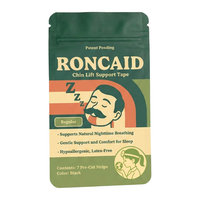
Support the jaw. If you know you're a mouth-breather, this is where Roncaid fits. It's an external strip under the chin that draws the suprahyoid muscles forward and supports the jaw so the mouth is less inclined to fall open, while leaving the lips completely free. It isn't mouth tape and it doesn't seal anything; the comparison explains why that distinction matters to me. It is not a treatment for snoring or sleep apnea, and it isn't for anyone with a beard, but for a mouth-breather with a clear nose it makes nasal breathing the easier path, on the couch or overnight in a guest bed. My honest read on the whole category, including my own product, is in do anti-snoring devices work.
Clear the nose before bed. Saline spray at bedtime, and a humidifier if the guest room has one, keep the nose open enough to use. Jaw support only helps if the nose can breathe; if you're congested, treat that first.
If you're the host
Put a humidifier or a bowl of water near the radiator in the guest room. Offer a white-noise machine or a fan. Keep a few pairs of foam earplugs in the guest bathroom; people are grateful and nobody has to say why. And if the recliner is where the loudest sleeper always ends up, it's a kindness to steer them to the couch.
When it's more than the holiday
Snoring that only shows up after a big meal and two glasses of wine is not a medical problem. The things to listen for are the ones that don't depend on the meal: witnessed pauses in breathing, gasping or choking awake, waking unrefreshed every morning, falling asleep in the middle of conversations rather than after dinner, or snoring that's loud every single night at home. Those are the signs covered in snoring vs. sleep apnea, and if a relative describes them to you this weekend, book the sleep evaluation in December rather than filing it away until next Thanksgiving.
FAQ
Does turkey really make you sleepy?
Not meaningfully. Turkey's tryptophan content is similar to other poultry. The drowsiness comes from the size of the meal, the carbohydrates, the alcohol, and the time of day.
Is it bad to nap right after a big meal?
Not bad, but a short walk first makes the nap more comfortable and quieter. Lying flat on a very full stomach also encourages reflux, which is its own reason to wait a bit and to nap on your left side.
Why do I only snore in the recliner?
Recliners put you on your back with your head tipped and your jaw relaxed, which is the worst position for the airway. The same person on their side on a couch often doesn't snore at all.
My brother says I stopped breathing during my nap. Should I worry?
Take it seriously. One observation after a heavy meal and alcohol isn't a diagnosis, but a witnessed pause is the single most useful sign of sleep apnea, and it warrants a conversation with your physician about a sleep study.
References
Vreeman RC, Carroll AE. Medical myths. BMJ. 2007;335:1288 — turkey contains no more tryptophan than chicken or beef; post-meal drowsiness is from meal size, carbohydrate and alcohol.
Simou E, Britton J, Leonardi-Bee J. Alcohol and the risk of sleep apnoea: a systematic review and meta-analysis. Sleep Med. 2018;42:38–46.
Ravesloot MJL, van Maanen JP, Dun L, de Vries N. The undervalued potential of positional therapy in position-dependent snoring and obstructive sleep apnea — a review of the literature. Sleep Breath. 2013;17(1):39–49.
American Academy of Otolaryngology–Head and Neck Surgery. Snoring, Sleeping Disorders, and Sleep Apnea (ENT Health patient information).
National Heart, Lung, and Blood Institute. Sleep Apnea: Symptoms.
Honest Answers, By Electronic Post.
The Thanksgiving Nap: Why You Snore Loudest After Dinner (and How to Survive a Full House)
Every year the week after Thanksgiving, a few patients come in because a relative told them something over the holiday. Sometimes it's "you snored so loud we turned the game up." Sometimes it's "you stopped breathing and I almost woke you." Both are worth taking seriously, and both are predictable, because the Thanksgiving afternoon nap is engineered, almost perfectly, to produce the loudest sleep of the year.
Why the after-dinner nap is so loud
It isn't the turkey. The tryptophan story has been repeated for decades, but the amount in a serving of turkey is unremarkable and no different from chicken. What makes you sleepy is the sheer size of the meal, the carbohydrate load, the alcohol, and the fact that early afternoon is already a natural low point in the day's alertness. Then you sit down on something soft.
What follows is a chain. A full stomach presses up on the diaphragm, so you breathe a little shallower and work a little harder for each breath. Alcohol relaxes the muscles that hold the throat open during sleep, so the airway narrows more than it normally would. And a couch or recliner puts you on your back with your head tipped either forward onto your chest or backward over an armrest, which lets the jaw drop and the tongue slide back. The mouth falls open, air starts moving fast through a narrowed throat, soft tissue vibrates, and the family hears it. The mechanics are the same as any other night, laid out in why do I snore; Thanksgiving just stacks every contributor into a single afternoon.
Why a full house hears everything
Holidays also change where people sleep. Guests are on pull-out couches and air mattresses, kids are doubled up, grandparents are in the room with the thin wall, and someone is always in the recliner. Snoring that goes unremarked in your own bedroom is suddenly a shared experience, and dry guest-room air in late November makes it worse for the same reasons winter does: a congested nose pushes people into mouth breathing, and mouth breathing is where most snoring starts.
There's a silver lining to this. Family members are often the first people to notice something a bed partner has gotten used to. If a sibling or an adult child tells you that you paused, gasped, or choked in your sleep, that's information you can't get any other way, and it's the most useful thing anyone will say to you all weekend.
How to make the nap quieter
Eat, then move, then nap. A twenty-minute walk after the meal before you lie down lets the stomach empty a little and takes the edge off the drowsiness. You'll still nap. You'll breathe better doing it.
Nap on your side, not your back. This is the single most effective change. If you're on the couch, put a pillow behind your back so you can't roll. If you're in the recliner, you're on your back by definition; move to the couch or a bed.
Time the drink. Alcohol close to sleep is the biggest single amplifier of snoring. A glass with the meal is one thing; a glass just before the nap, or the nightcap right before bed, is what produces the noise. Finish early or skip it.
Support the jaw. If you know you're a mouth-breather, this is where Roncaid fits. It's an external strip under the chin that draws the suprahyoid muscles forward and supports the jaw so the mouth is less inclined to fall open, while leaving the lips completely free. It isn't mouth tape and it doesn't seal anything; the comparison explains why that distinction matters to me. It is not a treatment for snoring or sleep apnea, and it isn't for anyone with a beard, but for a mouth-breather with a clear nose it makes nasal breathing the easier path, on the couch or overnight in a guest bed. My honest read on the whole category, including my own product, is in do anti-snoring devices work.
Clear the nose before bed. Saline spray at bedtime, and a humidifier if the guest room has one, keep the nose open enough to use. Jaw support only helps if the nose can breathe; if you're congested, treat that first.
If you're the host
Put a humidifier or a bowl of water near the radiator in the guest room. Offer a white-noise machine or a fan. Keep a few pairs of foam earplugs in the guest bathroom; people are grateful and nobody has to say why. And if the recliner is where the loudest sleeper always ends up, it's a kindness to steer them to the couch.
When it's more than the holiday
Snoring that only shows up after a big meal and two glasses of wine is not a medical problem. The things to listen for are the ones that don't depend on the meal: witnessed pauses in breathing, gasping or choking awake, waking unrefreshed every morning, falling asleep in the middle of conversations rather than after dinner, or snoring that's loud every single night at home. Those are the signs covered in snoring vs. sleep apnea, and if a relative describes them to you this weekend, book the sleep evaluation in December rather than filing it away until next Thanksgiving.
FAQ
Does turkey really make you sleepy?
Not meaningfully. Turkey's tryptophan content is similar to other poultry. The drowsiness comes from the size of the meal, the carbohydrates, the alcohol, and the time of day.
Is it bad to nap right after a big meal?
Not bad, but a short walk first makes the nap more comfortable and quieter. Lying flat on a very full stomach also encourages reflux, which is its own reason to wait a bit and to nap on your left side.
Why do I only snore in the recliner?
Recliners put you on your back with your head tipped and your jaw relaxed, which is the worst position for the airway. The same person on their side on a couch often doesn't snore at all.
My brother says I stopped breathing during my nap. Should I worry?
Take it seriously. One observation after a heavy meal and alcohol isn't a diagnosis, but a witnessed pause is the single most useful sign of sleep apnea, and it warrants a conversation with your physician about a sleep study.
References
Vreeman RC, Carroll AE. Medical myths. BMJ. 2007;335:1288 — turkey contains no more tryptophan than chicken or beef; post-meal drowsiness is from meal size, carbohydrate and alcohol.
Simou E, Britton J, Leonardi-Bee J. Alcohol and the risk of sleep apnoea: a systematic review and meta-analysis. Sleep Med. 2018;42:38–46.
Ravesloot MJL, van Maanen JP, Dun L, de Vries N. The undervalued potential of positional therapy in position-dependent snoring and obstructive sleep apnea — a review of the literature. Sleep Breath. 2013;17(1):39–49.
American Academy of Otolaryngology–Head and Neck Surgery. Snoring, Sleeping Disorders, and Sleep Apnea (ENT Health patient information).
National Heart, Lung, and Blood Institute. Sleep Apnea: Symptoms.